

Balance Excess Fire with Li Da Tapping and Wudang Taichi
The body often speaks before the mind is ready to listen. A flushed face. A racing pulse. Restless sleep. Heat rising in the chest or head. A dry mouth that water never seems to satisfy.
In Taoist healing and Chinese medicine, these signs can point to an excess of Yang, often described as excess Fire. Fire is not “bad.” It gives warmth, movement, digestion, passion, courage, and light. But when Fire grows beyond balance, it begins to consume rather than nourish.
My Qigong mentors always taught that an excess of Fire could consume the world. In the body, it can feel the same way. One small spark becomes a brushfire. Stress becomes anger. Anger becomes tension. Tension becomes sleeplessness, thirst, agitation, or inflammation. The system heats up, and the spirit has trouble settling.
That is why practices like Li Da Tapping Qigong and Wudang Taichi are so valuable. They offer a grounded way to release, cool, move, and restore. They do not ask the body to perform. They invite it to return.
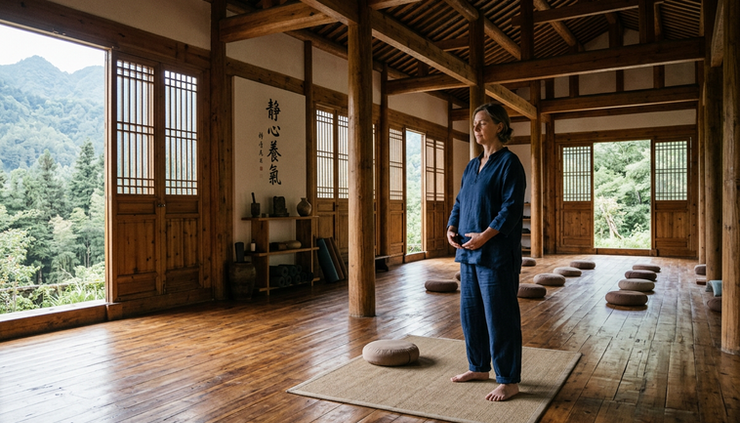
What excess Fire means in Chinese medicine
In Chinese medicine, the body is understood through patterns of relationship. Heat, Cold, Dampness, Wind, Yin, Yang, Qi, Blood, and organ systems all interact. The language is symbolic, but it also points to lived experience.
Excess Fire often describes a pattern of too much heat, stimulation, pressure, or upward-rising energy in the body. It may show up after a long season of emotional strain, poor sleep, overstimulation, heavy foods, alcohol, or long periods of sitting without enough movement.
Fire tends to rise. That is why many of its signs appear in the upper body:
A flushed face
Red or irritated eyes
A racing mind
Restlessness
Insomnia
Palpitations
Irritability
Dry mouth or strong thirst
Dry skin
Dark urine
A rapid pulse
This article is for educational purposes only. If symptoms are severe, sudden, persistent, or concerning, seek care from a qualified medical professional.
In classical Chinese medicine texts, the Heart, Liver, Lungs, and Stomach are often involved in Fire patterns.
Heart Fire can appear as palpitations, restlessness, agitation, and difficulty sleeping. The Heart is said to house the Shen, often translated as spirit or mind. When Heart Fire is strong, the Shen may feel unsettled.
Liver Fire can show through irritability, frustration, red eyes, headaches, muscle tightness, or emotional volatility. The Liver is closely tied to the smooth flow of Qi. When Qi stagnates, pressure builds. When pressure builds, heat can rise.
Stomach Fire may bring burning sensations, excessive hunger, bad breath, thirst, or craving for cooling foods. Rich, fried, spicy foods and alcohol may aggravate this pattern for some people.
Lung Fire can appear in acute respiratory irritation, a dry cough, skin itching, or heat held near the chest and surface of the body. The Lungs are linked with breath, skin, and the boundary between inner and outer worlds.
The point is not to label the body as broken. The point is to notice the pattern early enough to restore balance.
How daily life feeds the inner flame
Many people do not create excess Fire through one dramatic event. They build it through repetition.
Running every day like a hamster on a wheel while carrying emotional stress can trap the body in a state of pressure. Anger, frustration, grief, and repressed emotions need movement. When they have no safe path out, they become heat.
A sedentary lifestyle can add to the pattern. Sitting for hours stiffens the hips, compresses the breath, and limits circulation. The mind keeps racing while the body barely moves. This creates a strange split. The head becomes overactive, while the lower body becomes dull or stagnant.
Food and drink can add fuel. Alcohol, fried foods, and very spicy meals may feel satisfying at first, but in Chinese medicine they can stoke internal heat, especially in the Stomach and Liver. During or just after the heat of summer, this effect may feel stronger. The season has already warmed the body. Extra heat can push the system past its natural balance.
That is why autumn is such an important time to clear and regulate. After summer, the body often needs help releasing heat, restoring fluids, and settling the mind. This does not require force. It requires awareness, breath, rhythm, and practice.
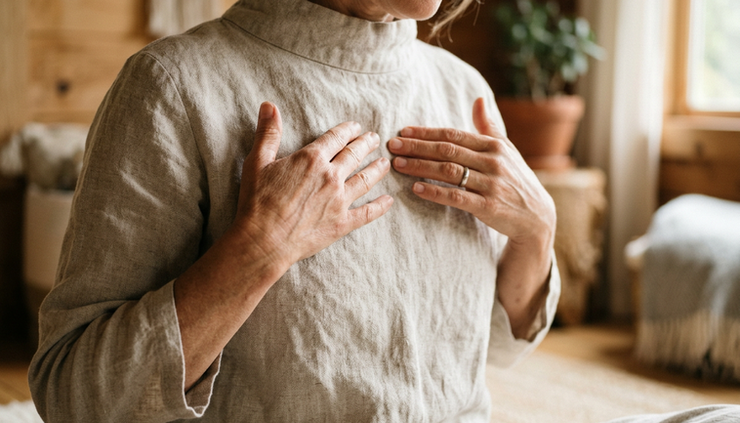
Why Li Da Tapping helps move stuck energy
Li Da Tapping Qigong is traditionally described as an ancient Taoist method for emotional release and energetic cleansing. The practice uses rhythmic tapping on specific areas of the body to awaken sensation, move stagnant Qi, and invite the body to let go.
Tapping is simple, but it can be powerful. The body responds to rhythm. A steady beat can soften tension, draw awareness into numb areas, and interrupt the loop of overthinking.
When emotions are held in the body, they often become physical patterns. The jaw tightens. The shoulders lift. The breath shortens. The belly hardens. The chest closes. Over time, these patterns can feel normal, even when they are exhausting.
Li Da Tapping gives the body a clear signal: it is safe to feel, safe to move, and safe to release.
A practice may include tapping along the arms, chest, ribs, abdomen, back, legs, or energy channels, depending on the teacher and sequence. The goal is not to hit hard. The goal is to wake up the tissues, stir the Qi, and bring attention to places that have gone silent.
For excess Fire, tapping can be especially useful because it gives heat a direction. Instead of rising and spinning in the head, energy begins to descend, circulate, and discharge. The practice can help transform agitation into movement and movement into clarity.
Many people also find tapping emotionally honest. It does not require a perfect meditation posture or a quiet mind. If anger is present, the practice meets it. If sadness is present, the practice makes room for it. If the body feels heavy, tapping begins there too.
The medicine is in the contact.
Why Wudang Taichi cools and harmonizes
If Li Da Tapping opens and releases, Wudang Taichi teaches the body how to flow again.
Wudang Taichi comes from the Taoist internal arts tradition associated with the Wudang Mountains. Its movements are circular, rooted, fluid, and attentive. Rather than pushing the body into intensity, Taichi trains softness, alignment, balance, and internal awareness.
This matters when Fire is excessive. Many people respond to inner heat by doing more, pushing harder, or trying to burn it off. Sometimes that helps. But often, more intensity adds more heat.
Wudang Taichi takes a different path. It teaches the body to relax without collapsing. It strengthens without aggression. It moves energy without scattering it.
The movements often feel like water shaping fire. The breath lengthens. The weight sinks. The spine rises gently. The gaze softens. The joints open. The mind has something steady to follow, so it no longer needs to race in every direction.
Over time, this kind of practice may support:
Better body awareness
More stable emotion
A calmer breathing rhythm
Improved balance and coordination
A felt sense of grounding
Greater ease in the joints and spine
The key word is harmony. Taichi does not suppress Fire. It helps Fire take its proper place.

Listening to the body before the fire spreads
One of the most practical gifts of Taoist practice is learning to listen early.
The body rarely moves from balance to crisis without sending signals. At first, the signs may be subtle. A little more thirst. A little more impatience. A little heat in the face at night. A restless mind when trying to sleep.
Then the signs grow louder. The urine becomes darker. The pulse feels faster. The skin feels dry. The eyes become red. The breath feels trapped in the chest. Thoughts multiply.
These are not random annoyances. They are messages.
When you notice internal heat, ask simple questions:
Have I been holding anger or frustration?
Have I been sitting too long without moving?
Have I been eating foods that create more heat in my body?
Have I been drinking enough water?
Have I been sleeping well?
Have I had any quiet time without screens or noise?
Have I allowed myself to exhale fully?
The answers do not need judgment. They need adjustment.
Small shifts can help. Eat lighter meals for a few days. Reduce alcohol, fried foods, and very spicy dishes. Take slow walks in the evening. Practice belly breathing. Stretch the ribs and hips. Go to bed earlier. Spend time near trees, water, or open sky.
Then add intentional practice. This is where Li Da Tapping and Wudang Taichi work beautifully together. One clears. The other harmonizes. One wakes the body. The other teaches it to flow.
What to expect from the Awaken Your Qi experience
The Awaken Your Qi: Li Da Tapping & Wudang Taichi Experience is a two-hour workshop designed to help activate energy, restore balance, and introduce authentic Taoist healing methods in a direct, embodied way.
The event takes place on Sat, Oct 17, at Sadana Center.
This is not only a class to watch or understand intellectually. It is an immersive practice experience. The body learns through breath, sound, sensation, rhythm, and repetition.
During the workshop, participants will explore Li Da Tapping Qigong as a method for emotional release and energetic cleansing. The tapping practice helps bring awareness to areas of tension, stagnation, and stored emotional charge.
The experience also includes the flowing, elemental movements of Wudang Taichi. These movements help guide energy through the body with softness, structure, and intention.
Together, the practices create a complete arc:
Li Da Tapping
Wudang Taichi
Awakens the body, releases stagnation, and supports emotional clearing.
Grounds the energy, restores flow, and helps the mind settle into calm awareness.
This combination is especially helpful after a hot, intense season or a period of emotional overload. Summer can leave heat in the body. Stress can trap it. Movement gives it a path.
No one needs to arrive with a perfect practice, flexible body, or quiet mind. These methods meet the body as it is. The only real requirement is willingness to listen.

Returning Fire to its rightful place
Fire has a sacred role. It warms the Heart. It fuels digestion. It gives courage, creativity, and vitality. Without Fire, life feels dim.
But Fire needs containment. It needs water, breath, rest, and flow. It needs the wisdom of the body to guide it.
When Fire rises too strongly, the answer is not to fight the body. The answer is to listen, move, release, and return. Li Da Tapping helps clear what has become stuck. Wudang Taichi helps the whole system remember rhythm, softness, and balance.
If you have felt overheated, restless, angry, dry, scattered, or unable to settle after a demanding season, this is your invitation to pause and practice.
Join us for Awaken Your Qi: Li Da Tapping & Wudang Taichi Experience on Sat, Oct 17, at 10:00 AM - 12:00 PM. Step into two hours of ancient Taoist movement, emotional release, and grounded restoration. Let the excess Fire move through you, not consume you.


Comments